
Biodiversity Progress Trackers
How do I efficiently track progress towards biodiversity targets across a portfolio of sites?
Many organisations collect large volumes of environmental data through Environmental and Social Impact Assessments (ESIAs), monitoring programmes and management plans; when collected and processed, this can provide a clear, auditable picture of progress across sites and portfolios. Our site biodiversity progress trackers enable companies to track, manage and evidence progress against a range of site-level biodiversity and natural capital targets, including avoid harm, no net loss, net gain, net positive, or other defined outcomes.
The trackers bring existing site data together in a simple, consistent way and helping teams understand how their projects and restoration efforts are changing biodiversity and natural capital over time. Built on experience supporting dozens of companies across the mining, renewables, and corporate sectors, they are easy for site teams to use and support clear decision‑making, adaptive management and confident reporting. They work across different targets and standards, including IFC Performance Standard 6 (PS6), without locking companies into a single method or platform.
We provide scoping and customisation of the tracker to meet your needs and context. Check our services to see how we can help you.
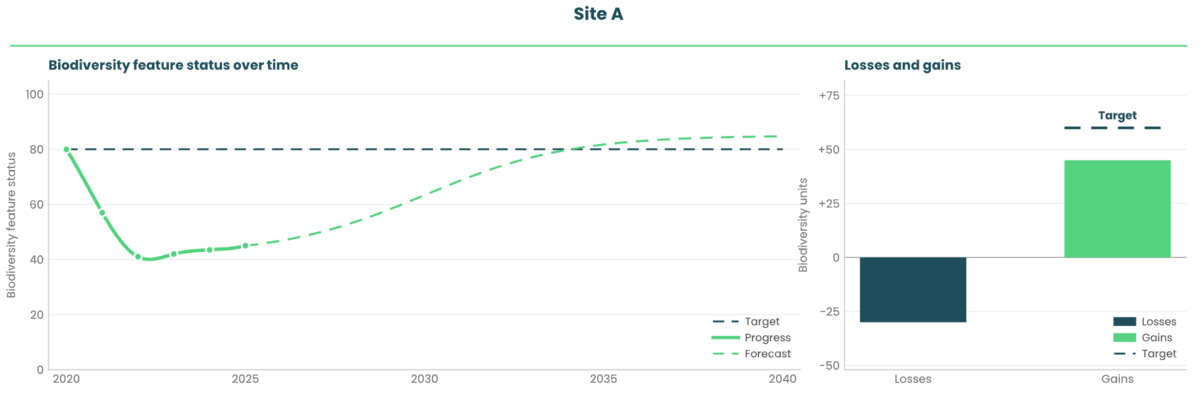
Transparent biodiversity and natural capital accountancy
The trackers apply a clear loss–gain accountancy approach for defined biodiversity features and relevant natural capital components, including land, species, ecosystems, and optionally ecosystem services. Losses and gains are recorded separately to keep a clear audit trail. Net position is calculated over time, making progress towards site-specific targets explicit, comparable and auditable.
Integrated with project lifecycles
Designed to complement ESIA, biodiversity management and natural capital assessment processes, the trackers use inputs projects already generated: baseline extent, condition or abundance; predicted impacts; and monitoring results. They support iterative use across the project lifecycle, from early screening through construction and operation, and can be adapted to match your specific needs and approaches. The tools are geared towards outcomes, with version control and audit trails to document decisions, assumptions and updates, and easily aggregable results to support tracking and reporting of progress at the organisational level.
Portfolio-ready, scalable and PS6-aligned
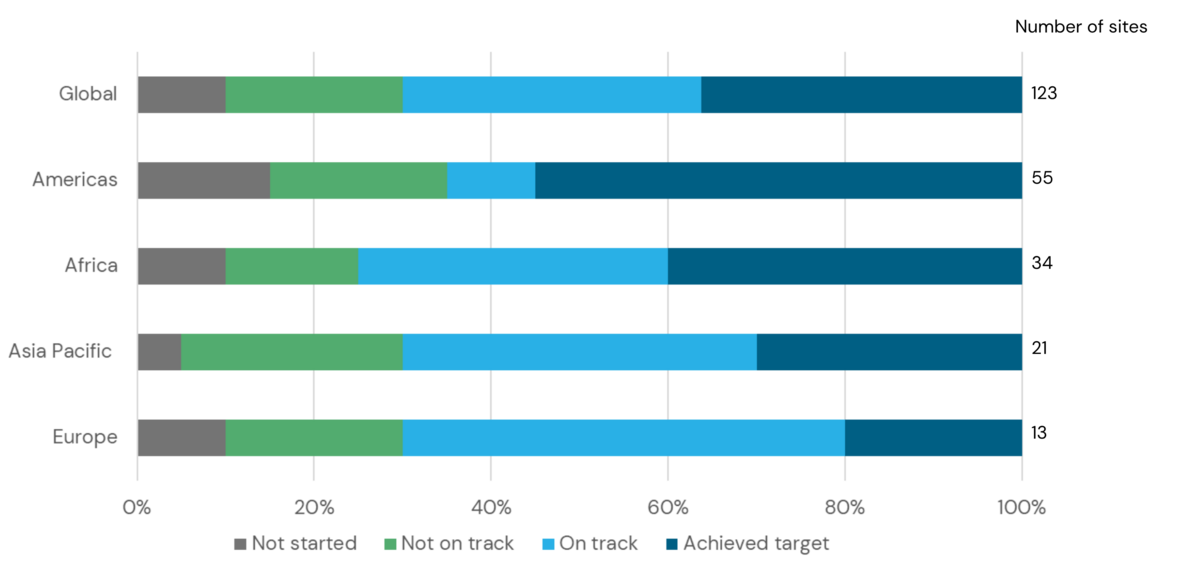
The trackers provide a common framework for tracking biodiversity and natural capital performance across multiple sites, geographies and project types. This enables aggregation at portfolio level to help you identify risk, compare performance and evidence implementation of the mitigation hierarchy in internal governance and external reporting and disclosure including under TNFD and GRI.
Scientifically robust and metric-agnostic
The framework supports both habitat- and species-based biodiversity metrics, as well as ecosystem condition or proxy measures used in natural capital accounting. It does not prescribe metrics or targets; instead, it provides a consistent structure to apply the most relevant metrics. This ensures scientific rigour while remaining flexible across sectors, jurisdictions and data availability.
Key contact

Ben Jobson
Principal Consultant