
How TBC helped Ørsted strengthen biodiversity measurement across its renewable energy portfolio
Organisation's Ambition
Ørsted is the global leader in offshore wind energy, with a vision to deliver a world powered entirely by green energy. The company supports a transition from fossil fuels to renewable energies through their wind, solar, biomass, and energy storage solutions, ensuring that the production of green energy benefits the climate, people, and nature.
Project Purpose
Ørsted aims to be amongst the leaders in biodiversity management in the global renewables industry. As part of its 2030 strategy, the company sought to develop and implement a leading biodiversity ambition for new renewable energy assets across onshore and offshore assets, including wind, solar and energy storage. Through several phases, we worked with Ørsted to define a clear understanding what of Net Positive Impact looks like within renewable energy assets, relevant actions for each site, and how to embed these methods across business operations using a tailored measurement framework.
Challenge
Ørsted’s high level of ambition helped make this project possible; however, developing a robust approach to tracking biodiversity losses and gains to demonstrate Net Positive Impact across a global portfolio of projects both onshore and offshore was not straightforward. The approach needed to be broad enough to cater for a wide range of future projects with differing geographical and technical contexts. In addition, it needed to be flexible enough to account for the specific biodiversity features in each location, and to inform and enable targeted action with local partners.
Our Approach
From the outset, the project took a highly collaborative approach, with TBC working alongside Ørsted’s in-house biodiversity team to establish a common understanding of the principles of biodiversity accountancy and the metrics for determining Net Positive outcomes for projects. We then gathered input from across the organization to inform the development of a measurement framework tailored to the Ørsted project cycle and data availability.
To bring the measurement framework to life, we undertook desktop piloting based on available information across five sites, helping Ørsted gain a practical understanding of how to apply it in real-world contexts. This work culminated in a clear and actionable Net Positive Impact implementation plan to guide continued in-house application of the measurement framework across additional sites.
Outcomes - the Biodiversity Measurement Framework
Through our close collaboration with Ørsted and advising on practical approaches to achieve the company’s key objectives, we helped publish a Biodiversity Measurement Framework for open discussion and feedback from a broad range of stakeholders. This initiative aimed to build an industry consensus on measuring and reporting the impact of renewable energy and biodiversity. The framework provides key information for new assets that aligns with reporting requirements for the CSRD, SBTN, TNFD, GRI, and other emerging frameworks, initiatives and industry coalitions.
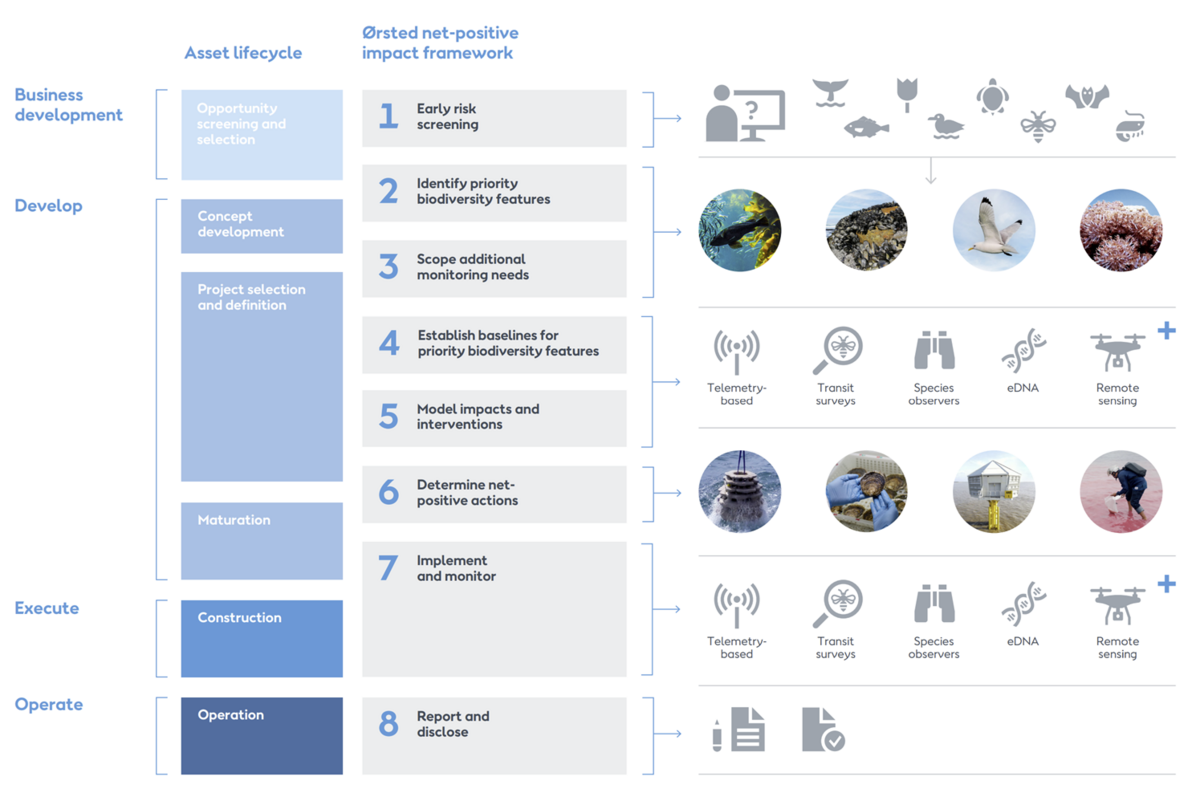
The biodiversity measurement framework supports Ørsted’s clear plan to deliver their 2030 biodiversity ambition: for all new renewable energy projects commissioned by Ørsted from 2030 onwards to have a biodiversity Net Positive Impact. The launch of the Biodiversity Measurement Framework received much positive interest and engagement from corporates, investors and civil society.
“The measurement framework The Biodiversity Consultancy developed with us has helped shape our approach in the business and how we're looking at biodiversity and setting out our boundaries for our ambition. And also, something that is incredibly positively received by our external stakeholders. So, I think it’s had a huge business impact”. - Cat Hemmingsen, Senior Biodiversity Advisor, Ørsted